







Rating
Rank
Alternative name
Author
Size
Tag
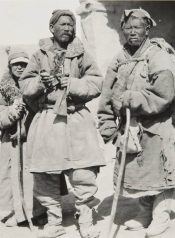
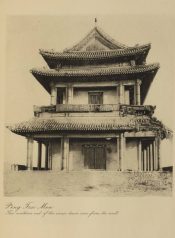
This set of Clapp's Photographs of China was taken by American geologist Frederick G. Clapp. A total of 432 photographs have been compiled this time, recording the landscapes, geology, and cultural customs captured by Clapp's team during their oil exploration journey in northwest China in the early period of the Republic of China. The main shooting locations include Beijing, Liaoning, Hebei, Shanxi, Shaanxi, Tianjin and other places. This set is currently collected in the Library of the University of Wisconsin-Milwaukee.
In December 1913, Clapp arrived in Beijing in advance as an expert from the Standard Oil Company of New York (Mobil) to make preliminary preparations for the upcoming Sino-US joint oil exploration project. At that time, Mobil was attempting to enter the Chinese market and gain control of resources through technical cooperation. On February 10, 1914, the Beiyang Government formally signed the Contract for the Joint Establishment of an Oil Company by China and the United States with Mobil, specifying that the US side would be responsible for technology and sending experts, while the Chinese side would provide coordination and administrative assistance. Immediately afterwards, the "Survey Team for Mineral Exploration under the Office for Organizing National Kerosene Mine Affairs" was established, marking the first transnational oil and gas resource survey in China.
In late February 1914, Clapp's team traveled to Qinhuangdao, then moved to the Jianchang area (now Lingyuan, Liaoning Province). After the survey, they reached the conclusion that:This area has no economic value for exploitation, the project adjusted its direction. The Chinese and American sides negotiated and decided to redirect their efforts to the northwest, shifting to the northern Shaanxi region, which has greater resource potential.
| 路线节点 | 说明 |
|---|---|
| 北京 → 张家口、怀安(直隶) | 出京西北行,进入山地地貌带 |
| 山西段:岢岚、阳高、天镇、应州、宁武 | 翻越太行,穿越黄土高原边缘地带,沿途调查地层与构造 |
| 陕西段:延安府一带 | 重点区域,着重进行油苗、地层露头的采样与分析 |
| 返程:由陕西南下河南,经武汉乘船东归 | 最终回到上海与天津,总结阶段性报告 |
Although Clapp's team did not directly find exploitable oil fields during this survey, they established the basic concept of the "Northwest Oil and Gas Belt," which had a profound impact. Later, places like Yan'an were re-surveyed in the late 1930s and became one of the earliest sites for domestic oil field development in China (Yanchang Oilfield).
Frederick Gardner Clapp (1879–1944) was an American geologist, primarily known for his contributions to the field of petroleum geology. He graduated from the Massachusetts Institute of Technology (MIT) in 1901. From 1902 to 1908, he worked at the United States Geological Survey (USGS). In 1911, he joined "Associated Geological Engineers" as a founding member; the firm was renamed "Associated Petroleum Engineers" in 1917, which was the largest geological consulting agency in the United States at that time.