









Rating
Rank
Alternative name
Author
Size
Tag
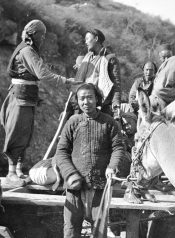
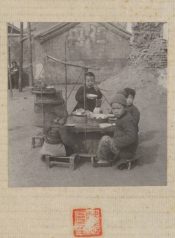
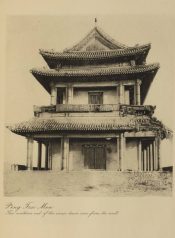
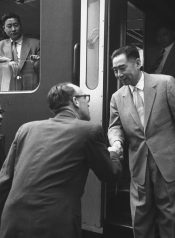
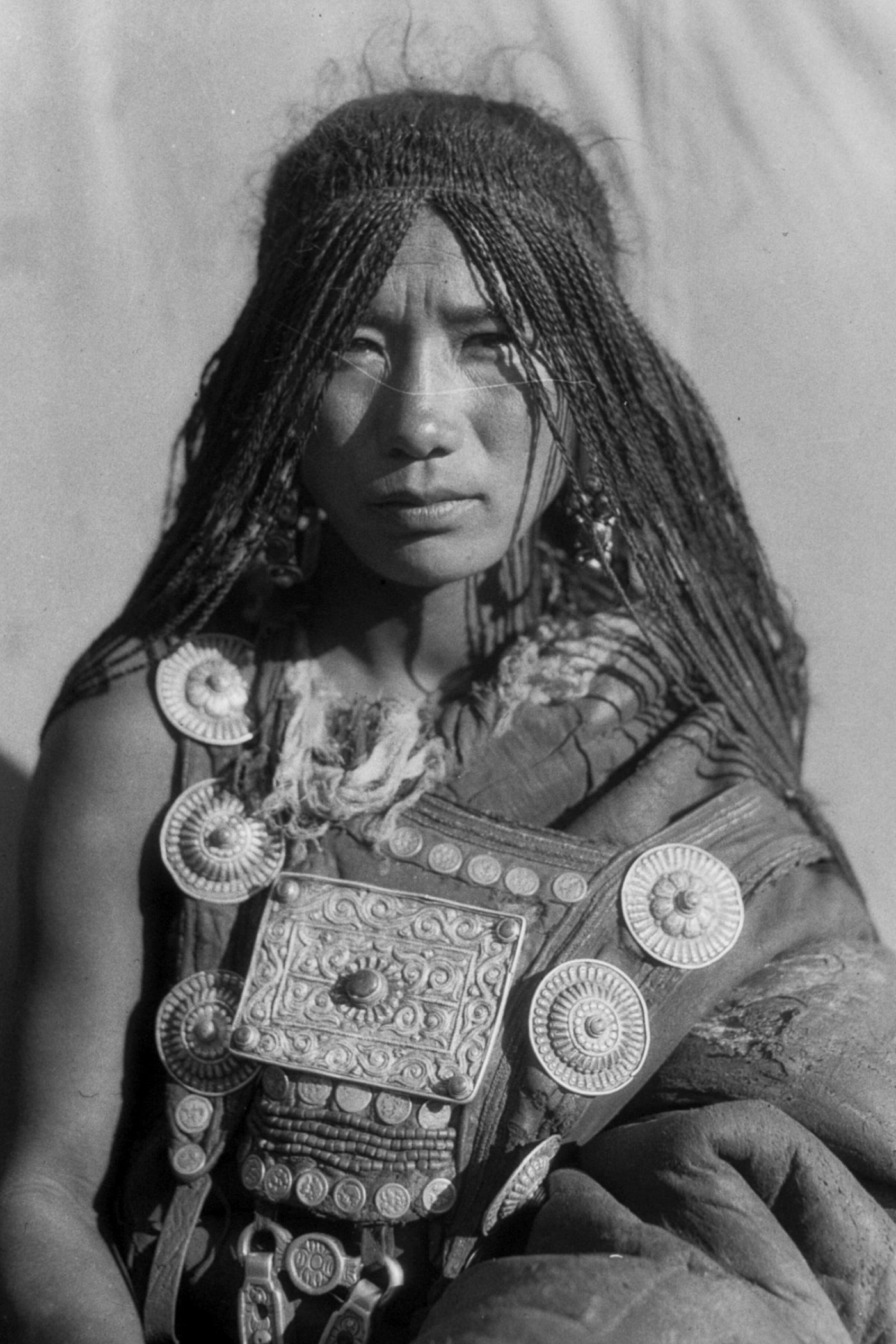
This set of Reverend Hai Yingguang's Chinese Photography Collection was taken by Reverend Carter D. Holton, a missionary of the Christian and Missionary Alliance from the United States. A total of 5,099 photographs have been compiled this time, mainly documenting the religious customs and local conditions and customs of ethnic minority areas in northwest China during the Republic of China era. The shooting period was roughly from 1923 to 1949, and the shooting locations were mainly in Gansu, Qinghai, Tibet, Beijing and other regions. This set of images is now housed in the Harvard University Library.
On November 29, 1923, Hai Yingguang departed from Vancouver for China, traveling on the same ship as Mr. and Mrs. Song Changren. In the first half of 1924, he arrived in Lintao (Didao) and studied Chinese there. On June 15, 1925, he married Hai Mude in Didao. After marriage, the couple went to Xunhua (now Xunhua Salar Autonomous County, Haidong City, Qinghai Province) to learn the Salar language and became the first full-time missionaries in the Gansu-Tibet border area to evangelize Muslims. The Xunhua Mission Station, located 100 kilometers west of Hezhou, was one of the most remote mission stations in the Gansu-Tibet border area. In May 1927, due to the anti-foreign movement, he, together with Mo Dayou and all missionaries of the China Inland Mission in Gansu, departed from Lanzhou, traveled down the Yellow River on sheepskin rafts for 24 days to Baotou, then moved to coastal areas and evacuated from China. During their furlough from 1927 to 1928, he and his wife completed their studies at Seattle Pacific College, both earning bachelor’s degrees. In September 1928, he came to China for the second time as a missionary. In December, he arrived in the Gansu-Tibet border area. In early 1929, he served at the Linxia Mission Station and participated in disaster relief activities. In 1930, he entered Xunhua again and established a small chapel in Jishi Town. In March 1934, he returned to the United States on furlough due to his wife’s serious illness. During the furlough, he studied Arabic at Princeton Theological Seminary under the guidance of Chi Weimou. In August 1936, he went to China for the third time. Due to the turbulent political situation and constant wars in China, in 1937, the couple sent their two daughters to Chefoo School of the China Inland Mission in Yantai, Shandong, then went to Tianjin and Beijing, where they visited mosques in both places and took photos of Islamic culture there. The Hai couple then traveled from Beijing to Xi’an, then to the Gansu-Tibet border area, and settled in Linxia. After the death of Fei Wenguang, he served as the sub-chairman of the Gansu-Tibet border area, overseeing evangelism work in Han and Hui areas. In 1943, he took a detour to India by plane and returned to the United States on furlough. In May 1947, he went to China for the fourth time. In July 1948, he was elected chairman of the Gansu-Tibet border area. In August 1949, one week before the People’s Liberation Army approached Hezhou, he was forced to evacuate Gansu, went to Hong Kong via Guangxi. In September 1950, with no hope of returning to Gansu, he returned to the United States from Hong Kong.
Reverend Hai Yingguang and his wife Hai Mude preached for nearly 27 years in the residential areas of the Salar, Dongxiang, Hui, Tibetan, and Han peoples in northwest China. They left behind original records documenting the religious cultures of various ethnic minorities in the Gansu-Qinghai region during the Republic of China era.
Hai Yingguang (Carter D. Holton, 1901–1973) was an American. He was born in Chetek, Wisconsin, USA in 1901. He grew up in Everett, Washington State during his childhood, and his faith was established when he attended the children’s Sunday School of the local Christian and Missionary Alliance. As a teenager, he had already determined to engage in overseas missionary work. In 1919, he graduated from high school. In the autumn of 1921, he began studying at Faith Bible School, where he met his classmate Hai Mude [1]. In 1922, he entered the Missionary Training School to study together with Hai Mude. He carried out missionary work in China from 1923 until he returned to the United States in 1950. Starting from 1951, he ended his career as a missionary and worked at a seed company. He retired in 1971. On April 26, 1973, he passed away at his home in Riverside, California.